Discover
Align the commercial model, audience, catalog, markets, platform requirements, integrations, operational constraints, and measurable revenue goals.
Conversion-focused online stores, marketplaces, migrations, and commerce systems engineered to make buying easier, operations cleaner, and revenue more scalable.
 Ecommerce Development options
Shopify Store DevelopmentConversion-led Shopify storefronts with clean merchandising, apps, analytics, and scalable operations.
02WooCommerce StoreFlexible WooCommerce stores built for WordPress teams that need ownership, customization, and control.
03Magento StoreRobust Magento commerce systems for complex catalogs, customer groups, workflows, and integrations.
Ecommerce Development Approach
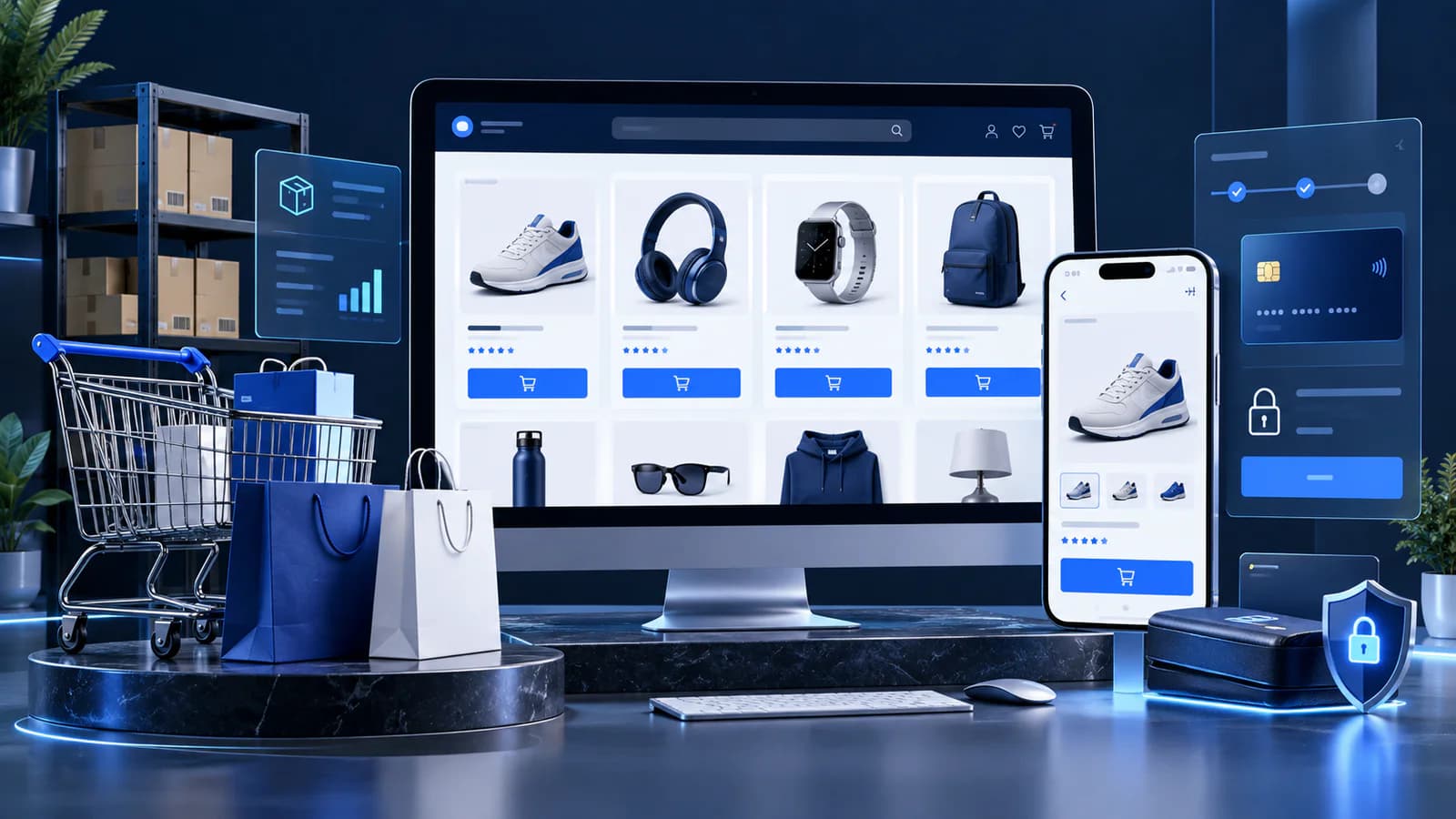
Ecommerce Development should do more than produce a collection of deliverables. For retailers, direct-to-consumer brands, wholesalers, and marketplace operators that need a more reliable path from product discovery to repeat purchase, it needs to connect store strategy, catalog structure, product discovery, merchandising, storefront UX, cart and checkout, payments, shipping, analytics, retention, and operational integrations into one understandable system. That connection keeps strategic intent visible during execution and makes every decision easier to evaluate against the audience, the business objective, and the experience the organization wants to create.
Our work begins by clarifying the commercial model, customer intent, product complexity, average order value, fulfillment requirements, and the points where shoppers currently hesitate or abandon the journey. This foundation prevents teams from moving too quickly into production with unresolved assumptions. It also establishes a practical definition of success, so priorities can be compared, scope can be controlled, and stakeholders can review progress using shared criteria instead of personal preference or disconnected channel metrics.
During delivery, we focus on scalable templates, useful product information, intuitive filters, trustworthy checkout flows, accurate revenue tracking, and platform decisions that match the team’s daily operating reality. Strategy, content, design, technology, measurement, and quality assurance remain connected throughout the engagement. Reviews happen at meaningful checkpoints, decisions are documented, and dependencies are surfaced early, helping the work move forward without sacrificing clarity, usability, performance, or the standards required for a confident launch.
Our Ecommerce Development Process
Align the commercial model, audience, catalog, markets, platform requirements, integrations, operational constraints, and measurable revenue goals.
Shape product discovery, navigation, merchandising, product pages, cart, checkout, and post-purchase journeys around customer intent and mobile behavior.
Develop the storefront, configure catalog and payments, connect business systems, implement analytics, and create maintainable workflows for your team.
Validate devices, orders, taxes, shipping, tracking, speed, and SEO before launch, then improve conversion and retention using real revenue data.
Ecommerce Platforms & Tools
Ecommerce Development FAQs
Straight answers about platforms, timelines, migrations, integrations, mobile conversion, SEO, support, and how High Edge Media approaches ecommerce growth.
We recommend a platform only after reviewing your catalog size, product complexity, markets, internal workflows, integrations, growth targets, and ownership preferences. Shopify suits many fast-moving brands, WooCommerce offers deep WordPress flexibility, Magento supports complex commerce operations, and custom development is reserved for requirements that genuinely justify it.
A focused store launch typically takes 6–10 weeks. Larger catalogs, custom checkout logic, marketplace functionality, ERP or CRM integrations, complex migrations, and multi-market requirements can extend delivery to 12–20 weeks. We confirm milestones after discovery and catalog review.
Yes. Our migration plan covers products, variants, customers, orders, content, media, metadata, redirects, analytics, and search-critical URLs. We validate the new store before launch and monitor indexing, tracking, checkout, and revenue signals after cutover.
Yes. We integrate suitable payment gateways, shipping providers, tax tools, inventory systems, CRM, ERP, email automation, reviews, subscriptions, loyalty tools, and analytics. Every integration is selected around operational value, reliability, security, and maintainability.
Yes. Mobile buying journeys, product discovery, collection structure, checkout friction, Core Web Vitals, structured data, crawlability, metadata, and analytics are considered from the start—not added as a final checklist.
Yes. Ongoing partnerships can include technical maintenance, merchandising improvements, speed optimization, CRO experiments, analytics, email flows, SEO, feature development, and campaign landing pages based on real customer and revenue data.
Start Your Ecommerce Project
Share your commercial objective, catalog, platform, integrations, budget, and deadline. We will recommend the cleanest path from opportunity to launch and optimization.