
React Development Services

Create React interfaces that feel fast, consistent, and product-ready.

Component systems, dashboards, portals.

high-edge / react-interface Live
Component Experience SystemReact Interface Engine
Delivery healthControlled
MeasurementGA4 + events
Launch riskReduced

The Challenge

React products slow down through component debt.

Component Debt / 01Strategic Diagnosis

React can move quickly, but speed fades when screens are built without reusable patterns, consistent state rules, accessible components, and tested interaction behavior.

Teams often inherit duplicated UI, unclear component ownership, fragile API states, and performance issues on the screens customers use most.

We build React interfaces with a component-first system, practical product UX, clean data states, responsive behavior, and QA that supports confident releases.

For React Development, the real damage usually appears when component debt starts guiding the project. Teams make local fixes, add tools, redesign isolated screens, or change platforms without first deciding how product users, admins, sales teams, and customer-facing workflows should move from attention to trust, comparison, and action.

If your React is harder to update than it should be, if performance and reporting are unclear, or if every improvement creates another dependency, you are likely facing the same three structural hurdles below. We address them before production so the finished React interface system is easier to launch, measure, maintain, and keep improving.
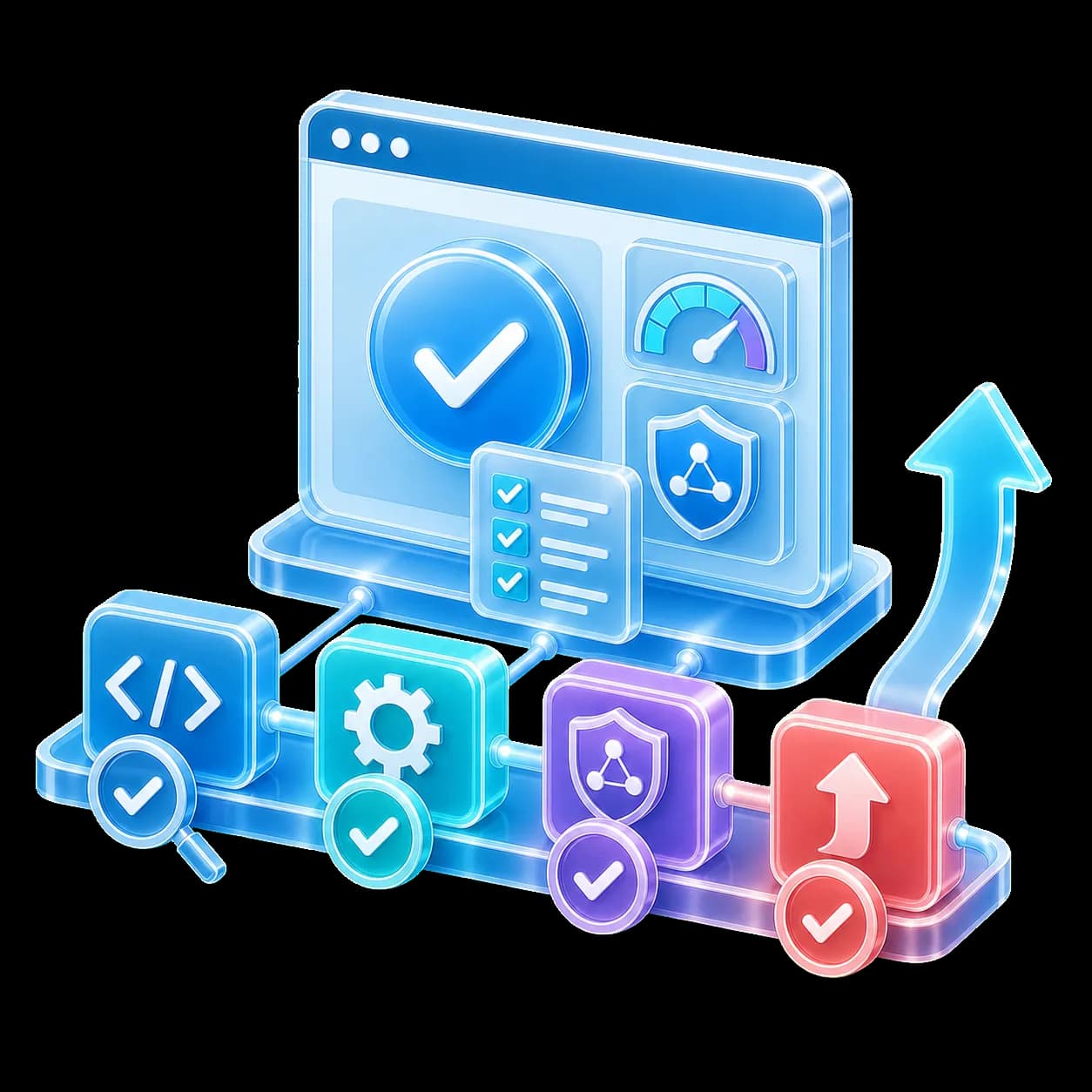
React component system and product interface workflow
The Bottom LineReact Development works best when message, UX, engineering, analytics, and operations are planned as one system instead of separate tasks.

What We Offer

React development for polished product interfaces and reusable front-end systems.

We build React dashboards, portals, SaaS screens, marketing experiences, and component systems that align design, state, API, accessibility, and performance. Most react development work underperforms when strategy, content, design, technical execution, analytics, and ownership are handled in silos, leaving product users, admins, sales teams, and customer-facing workflows with an experience that looks complete but does not guide decisions clearly.

The result is an interface that users can understand and product teams can extend. Our React Development operating system connects React, React interface system, conversion planning, performance standards, integrations, and post-launch priorities into one scalable delivery model built around clearer product journeys, lower interface friction, and faster feature delivery.

01

Strategy and Scope Control

  • Audience and offer mapping: Clarify how product users, admins, sales teams, and customer-facing workflows evaluate the offer before wireframes or implementation begin.
  • Page and feature ownership: Define the React interface system structure, content states, integrations, and approval responsibilities early.
  • Conversion path planning: Set primary actions, proof points, lead routes, and measurement events around clearer product journeys, lower interface friction, and faster feature delivery.
02

Premium Experience Design

  • Responsive interface system: Design reusable sections, cards, forms, and navigation patterns that feel aligned with React.
  • Content hierarchy: Shape page flow around clarity, credibility, comparison, objection handling, and action.
  • Accessible interaction states: Plan readable contrast, keyboard flow, touch targets, hover states, and mobile layout behavior.
03

Clean Technical Implementation

  • Maintainable build structure: Create a React interface system that can be improved without fragile edits or repeated rebuilds.
  • Performance guardrails: Keep assets, scripts, layout shifts, media, and third-party tools under control from the start.
  • Integration readiness: Connect forms, checkout, CRM, analytics, automation, search, or APIs based on business need.
04

Launch and Growth Foundation

  • QA and release checks: Validate browsers, devices, forms, redirects, tracking, metadata, content, and error states.
  • Operational handoff: Document how your team should update, monitor, and extend the React interface system.
  • Optimization roadmap: Leave clear priorities for CRO, SEO, speed, security, maintenance, and content expansion.

Delivery Roadmap

A React roadmap for component quality, product UX, and performance.

Step 01

Interface Audit

Review screens, component duplication, state handling, API behavior, accessibility gaps, loading states, and performance constraints.

Step 02

Component System

Define reusable UI patterns, interaction states, responsive rules, design tokens, data states, and product workflow priorities.

Step 03

React Build

Implement components, state flows, API integrations, forms, tables, dashboards, routing, and testable interface behavior.

Step 04

Product QA

Validate responsiveness, accessibility basics, rendering performance, edge states, errors, analytics, and handoff documentation.

Case Studies / Success Stories

React Development outcomes built through connected strategy, execution, measurement, and optimization.

SaaS company / Conversion

React Development Conversion System

Rebuilt the React interface system around stronger page hierarchy, clearer proof, cleaner actions, and measurable visitor behavior.

  • Cleaner lead routing and conversion tracking
  • Stronger message match across key pages
  • More useful post-launch optimization backlog
analytics platform / Operations

React Operations Upgrade

Simplified the operating setup so content, updates, approvals, and integrations could be managed without slowing the marketing team.

  • Reduced manual update friction
  • Clearer ownership for recurring changes
  • More stable release and QA process
B2B software team / Performance

React Development Performance Relaunch

Aligned design, technical cleanup, analytics, and launch checks to create a faster, more trustworthy experience for priority visitors.

  • Improved page experience signals
  • Fewer avoidable launch risks
  • Better visibility into user journeys

Platforms and Tools

The stack behind component systems, fast interfaces, state, APIs, and product UX.

ReactNext.jsTypeScriptViteReduxTailwindStorybook
FigmaVercelPlaywrightJestGoogle Analytics 4Tag ManagerSearch Console

Case Studies / Success Stories

More React Development proof from connected planning, technical execution, and growth improvement.

SaaS company / Conversion

React Development Conversion System

Rebuilt the React interface system around stronger page hierarchy, clearer proof, cleaner actions, and measurable visitor behavior.

  • Cleaner lead routing and conversion tracking
  • Stronger message match across key pages
  • More useful post-launch optimization backlog
analytics platform / Operations

React Operations Upgrade

Simplified the operating setup so content, updates, approvals, and integrations could be managed without slowing the marketing team.

  • Reduced manual update friction
  • Clearer ownership for recurring changes
  • More stable release and QA process
B2B software team / Performance

React Development Performance Relaunch

Aligned design, technical cleanup, analytics, and launch checks to create a faster, more trustworthy experience for priority visitors.

  • Improved page experience signals
  • Fewer avoidable launch risks
  • Better visibility into user journeys

Testimonials

What React Development Clients Say

Strategy clarity
High Edge Media turned our react development brief into a focused plan with clear pages, ownership, and launch checks.
Olivia GrantMarketing Lead, SaaS company
Build quality
The React work feels polished without becoming hard to manage. Our team understands what changed and how to improve it.
Neel PatelOperations Manager, analytics platform
Growth readiness
They connected strategy, design, implementation, and measurement instead of treating the project as a disconnected technical task.
Hannah LewisFounder, B2B software team

React Development FAQs

Clear answers before you invest, relaunch, or scale.

Scope, timelines, platform fit, risk control, handoff, and post-launch support for react development.

What is included in your react development service?

Scope can include discovery, content structure, UX planning, implementation, integrations, performance checks, analytics, QA, launch support, and documentation. For React, the proposal focuses on React interface system planning, UX, implementation, tracking, QA, and launch support.

How long does a react development project take?

Focused improvements can take 1 to 3 weeks. Full react development projects usually take 4 to 10 weeks depending on content readiness, integrations, approvals, and launch risk.

Can you work with our existing React setup?

Yes. We can audit the current setup, keep useful parts, remove weak dependencies, and plan improvements without interrupting live operations. If component debt is a concern, we stage the work with backups, reviews, and rollback steps.

Will the page be SEO and analytics ready?

Yes. We prepare heading structure, metadata guidance, schema where useful, crawl basics, Core Web Vitals priorities, conversion events, GA4, Tag Manager, and reporting notes before launch.

Do you handle copy, design, and development together?

Yes. The service connects message hierarchy, premium interface design, responsive development, testing, and launch planning so react development is not treated as separate disconnected tasks.

What happens after launch?

After launch, we can support monitoring, fixes, content updates, performance improvement, security checks, campaign pages, analytics reviews, and roadmap work for react development.

Start Your React Development Project

Ready to turn react development into a clearer growth system?

Share your objective, audience, current platform, pages, integrations, budget, and deadline. We will recommend the cleanest path from discovery to launch and optimization.